
-
Publish Your Research/Review Articles in our High Quality Journal for just USD $99*+Taxes( *T&C Apply)
Offer Ends On
Publish Your Research/Review Articles in our High Quality Journal for just USD $99*+Taxes( *T&C Apply)
Offer Ends On
Ajaz Ahmad Bhat*
Corresponding Author: Ajaz Ahmad Bhat, Islamic University of Science and Technology Awantipora, Pulwama, Pin-192122, Jammu and Kashmir, India.
Received: April 20, 2026 ; Revised: April 26, 2026 ; Accepted: April 28, 2026 ; Available Online: April 30, 2026
Citation:
Copyrights:
Views & Citations
Likes & Shares
The use of Artificial Intelligence (AI) and the growing impact of social media platforms such as Twitter, Facebook, and Instagram have significantly changed how people invest in financial markets. AI tools, like sentiment analysis and machine learning, help investors make better decisions by analyzing real-time opinions and emotions shared on social media. Platforms like Twitter, Reddit, Facebook, and Instagram often drive market trends by influencing public sentiment, which can lead to emotional or irrational investment decisions. This study examines how AI can be utilized to analyze social media content, to understand its impact on shaping investment behavior. The paper focuses on how AI can help investors make more informed decisions, reduce emotional biases, and manage risks effectively. By examining how sentiment from social media influences short-term market fluctuations, the research investigates how AI can improve decision-making and counter the spread of rumors or misleading information. Ultimately, the study aims to demonstrate how AI tools can support investors in making more rational, data-driven choices while mitigating the impact of irrational behaviors often amplified by social media platforms such impact of irrational behaviors often amplified by social media platforms such as Twitter, Facebook, and Instagram.
Keywords: Artificial Intelligence, Social Media, Investment Behavior, Sentiment Analysis, Machine Learning, Social Media Behavioral Finance, Risk Management, Social Media Platforms (Twitter, Facebook, Instagram).
INTRODUCTION
The rise of Artificial Intelligence (AI) and the worldwide use of social media have greatly impacted how investors collect information and make better decisions in the financial markets. In the past, investors depended mainly on traditional sources like news, reports, and a psychological approach, e.g., expert advice or peer groups, to guide their investments. Today, social media platforms such as Twitter, Facebook, and Instagram provide a real-time stream of information, discussions, and opinions about stocks, companies, and market trends. This allows investors to quickly assess the mood of the market and make decisions based on the latest public sentiment. Social media has become a powerful tool for understanding how investors and the public feel about specific stocks or market conditions, sometimes even driving market trends.
Meanwhile, AI technologies, especially tools like sentiment analysis and machine learning, have made it possible to process and analyze huge amounts of data in a fraction of the time it would take a human. AI can sift through vast amounts of social media posts, news articles, and market data to detect patterns and trends, helping investors make more informed decisions. By combining AI with social media data, investors can gain deeper insights into market sentiment and make decisions that are more data-driven and less influenced by emotions. This paper explores how AI and social media work together to shape investment behavior and how investors can use these technologies to enhance their decision-making process, reduce emotional biases, and better navigate the complexities of modern financial markets.
Contribution of the Study
This study makes several important contributions to the existing literature on behavioural finance and financial market analysis. First, it empirically demonstrates how social media engagement—measured through platform activity and sentiment dynamics—affects short-term stock market behaviour, thereby strengthening the link between digital communication channels and real market outcomes. Second, the study integrates Artificial Intelligence–supported analytics with traditional financial indicators such as trading volume, volatility, and price movements, offering a practical framework that connects AI tools directly with investment decision-making rather than treating AI as a purely technical concept.
Third, by incorporating trust in AI as a moderating variable, the research advances behavioural finance literature by showing how technological trust amplifies or weakens the influence of social media sentiment on investor behaviour. Finally, the study provides actionable insights for regulators, stock exchanges, and investors by highlighting how AI-based monitoring of social media can reduce information asymmetry, mitigate rumour-driven volatility, and improve market efficiency. These contributions position the study as both academically relevant and practically valuable for modern financial markets.
Review of Literature
Recent literature highlights the growing influence of social media and Artificial Intelligence on investor behavior and financial market dynamics. Studies such as Antweiler and Frank (2004) and Bollen et al. (2011) demonstrate that online discussions and social media sentiment contain valuable information that can predict stock market movements, challenging the traditional efficient market hypothesis. Behavioral finance research further emphasizes that investor sentiment, shaped by emotional and cognitive biases, significantly affects trading decisions and asset prices (Barberis & Thaler, 2003; Baker & Wurgler, 2006). With the advancement of AI technologies, researchers have increasingly employed machine learning and sentiment analysis techniques to process large volumes of unstructured social media data and translate investor emotions into measurable financial indicators (Das & Chen, 2007; Kearney & Liu, 2014). More recent studies suggest that AI-driven analytics enhance decision-making accuracy by reducing information overload and mitigating behavioral biases, particularly during periods of market uncertainty (Deng & Lin, 2022; Rossi & De Silva, 2021). However, existing literature also notes that excessive reliance on social media can amplify herd behavior and rumor-driven volatility, highlighting the need for AI-based monitoring frameworks that integrate behavioral signals with traditional market variables (Chen et al., 2014; Tetlock, 2007). Despite these advances, empirical evidence linking social media engagement, AI-supported analysis, and actual market behavior remains limited, especially in the context of short-term investment decisions—thereby establishing a clear research gap addressed by the present study. Bhat AA (2018) explored retail investor behavior and classified investors based on experience level namely inexperienced, experienced, and professional. The study employed stratified random sampling on 300 respondents and identified that psychological biases, myths about market risk, and lack of financial education significantly impacted investment decisions. This research provides a comparative foundation for the present study focused on Anantnag, helping to contextualize regional variations in investor preferences and awareness.
Advancements in AI particularly machine learning and sentiment analysis have enabled researchers to process large volumes of unstructured social media data and translate investor emotions into measurable financial indicators (Das & Chen, 2007; Kearney & Liu, 2014). Recent studies emphasize that AI-supported analytics are especially valuable in emerging markets, where information asymmetry, limited financial literacy, and informal communication channels are more prevalent (Deng & Lin, 2022; Rossi & De Silva, 2021). However, existing literature also warns that excessive reliance on social media can amplify speculative behavior and short-term volatility, underscoring the need for AI-based monitoring systems that integrate behavioral signals with traditional market variables (Chen et al., 2014; Tetlock, 2007). Despite growing interest in this area, empirical evidence linking social media engagement, AI-assisted analysis, and actual market outcomes in emerging market contexts particularly India remains limited, thereby establishing a clear research gap addressed by the present study.
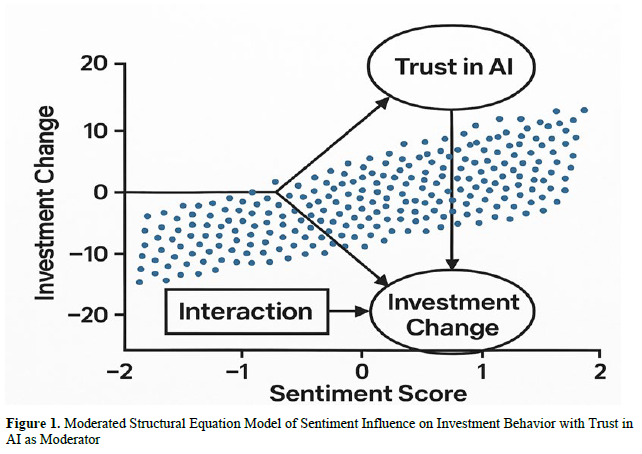
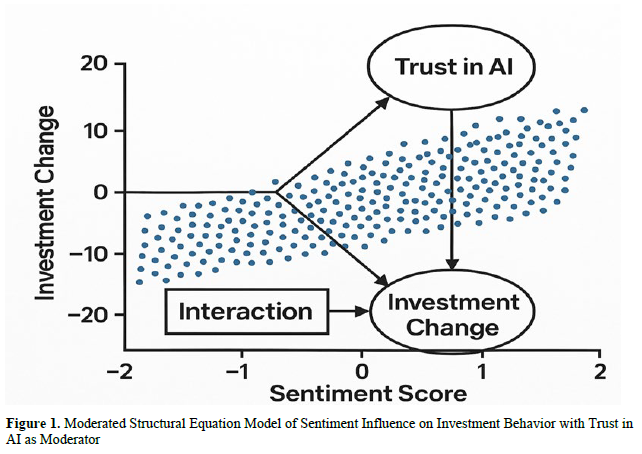
This moderated structural equation model examines how social media sentiment affects investment behavior, with trust in AI tools acting as a moderator. The results indicate that higher sentiment scores (such as positive posts or optimistic discourse) are associated with increased investor activity. Additionally, greater trust in AI independently relates to stronger investment engagement, reflecting the growing reliance on algorithmic predictions. Importantly, the interaction effect shows that trust in AI enhances the effect of sentiment—investors with high trust in AI are more likely to respond to positive sentiment signals, while those with low trust show a weaker or negligible response. The model highlights how cognitive and emotional cues from social platforms, filtered through technological trust, influence financial behavior. In summary, this model emphasizes a significant moderation effect: trust in AI reinforces the influence of social sentiment on behavior, suggesting that emotional and technological factors together shape modern investor decisions in the digital age.
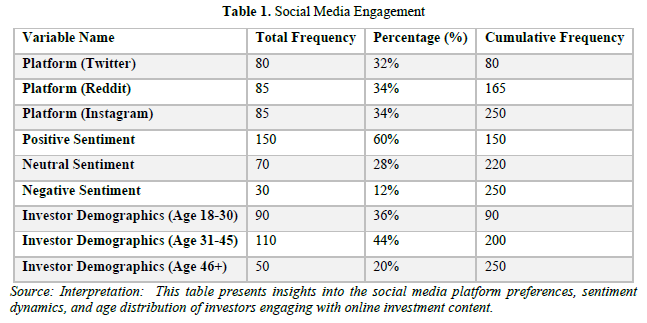
Platform Engagement
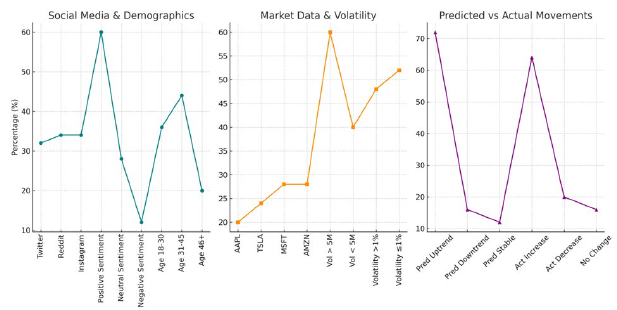
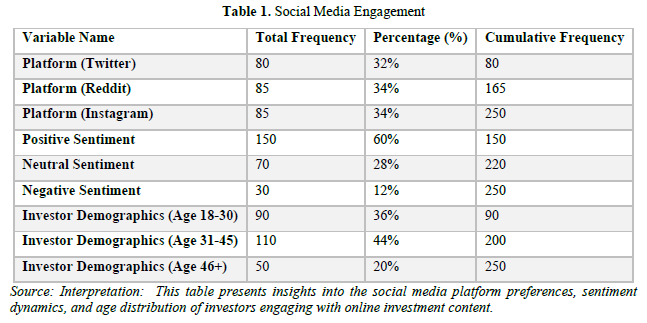
Among the 250 participants, Instagram and Reddit emerged as the most engaged platforms (both at 34%), slightly ahead of Twitter (32%). This nearly equal distribution suggests that retail investors diversify their engagement across multiple platforms, with Instagram's visual content and Reddit’s discussion forums both serving as influential sources of financial information. Twitter remains a strong platform, likely due to its real-time updates and financial influencers.
Sentiment Distribution
A dominant 60% of social media sentiment is positive, followed by neutral at 28%, and negative at just 12%. This highlights an overall optimistic investor climate, where social media discourse tends to encourage or reinforce bullish expectations. The strong presence of positive sentiment can drive herd behaviour and risk-taking, especially among emotionally reactive investors.
Investor Age Demographics
The age distribution indicates that the 31–45 age group constitutes the largest segment of investors (44%), followed by 18–30 (36%), and 46+ (20%). This suggests that middle-aged investors—likely in their peak earning years—are most active on social media for financial insights. The substantial share of younger investors reflects a generational shift toward digital-first investing, driven by fintech platforms and online communities.
This table underscores the importance of sentiment and platform dynamics in shaping retail investor behavior. The overwhelming positivity of sentiment, paired with widespread use of visual and community-based platforms (Instagram, Reddit), suggests a strong social and emotional component in investment decisions. Additionally, the age profile indicates that both young and mid-career individuals are embracing social media as a financial tool, signaling a transformation in how investment information is consumed and acted upon in the digital age.
Graphic Representation

Stock-Specific Mentions
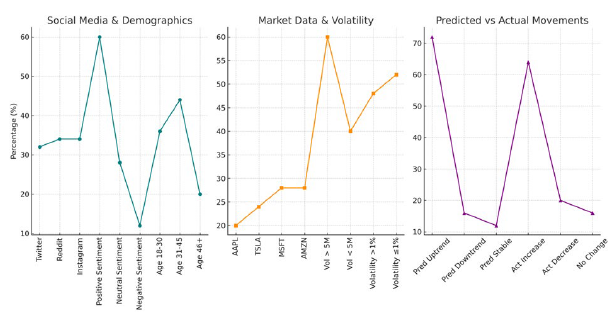
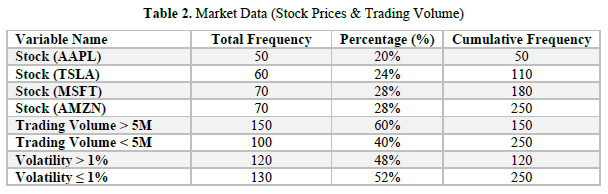
Among the 250 observations, Microsoft (MSFT) and Amazon (AMZN) received the highest attention (28% each), followed by Tesla (TSLA) at 24%, and Apple (AAPL) at 20%. The relatively even spread indicates that all four tech giants are consistently in the spotlight, but Microsoft and Amazon dominate discussions. This may be due to their recent innovations, consistent financial performance, or high institutional activity. The inclusion of such high-cap stocks suggests that retail investors are particularly focused on well-established, less speculative companies.
Trading Volume Patterns
The data reveals that 60% of trading activity occurred in stocks with a volume greater than 5 million shares, highlighting investor preference for highly liquid stocks. High trading volume often implies stronger investor confidence, easier entry and exit points, and possibly a greater influence of institutional participation. The 40% of low-volume mentions may involve either smaller-cap stocks or off-peak discussions.
Volatility Trends
Market volatility was nearly balanced—52% of the days recorded volatility ≤1%, while 48% exceeded 1%. This narrow split suggests that the observed period captured a mix of both stable and volatile market conditions. The near-even distribution makes the dataset robust for analyzing behavior under varying risk conditions and offers a realistic representation of market fluctuations.
Graphic Representation
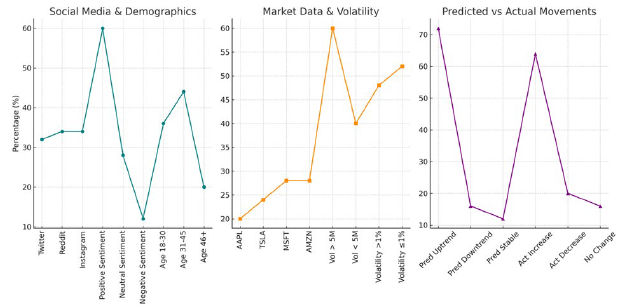

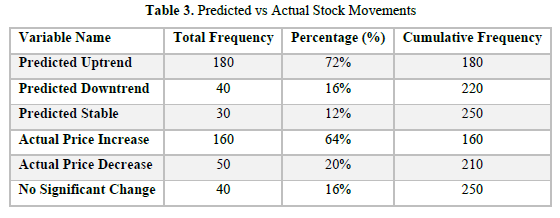
Interpretation: The model's predictions align fairly well with actual movements. 72% of predicted trends were upward, closely matched by 64% actual increases. Downtrends and stable predictions were underestimated relative to actual occurrences. This suggests the model leans optimistic, likely influenced by dominant positive sentiment data. Nonetheless, the gap between predicted and actual suggests room for refining the algorithm—particularly to better capture bearish and stable market conditions.
These visualizations collectively reveal an emotionally optimistic investor base, driven by high engagement on platforms like Instagram and Reddit, focusing on high-volume tech stocks, and guided by AI predictions that tend to align with overall market optimism.
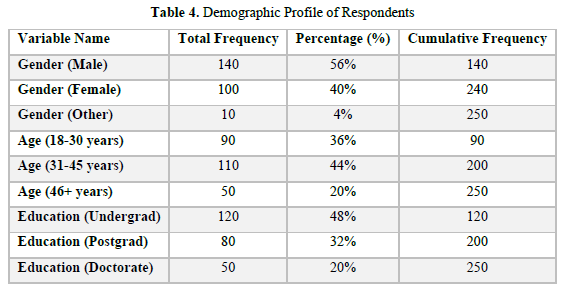
Graphic Representation

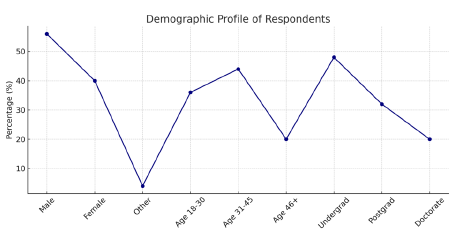
Interpretation: The demographic profile shows that most investors are male (56%), with women making up 40% and individuals identifying as other genders accounting for 4%, highlighting a still-evolving but noteworthy gender gap in investment participation. The age distribution indicates that the largest group of respondents falls within the 31–45 age range (44%), followed by younger investors aged 18–30 (36%), while those above 46 comprise only 20%. This suggests that middle-aged and younger individuals, especially those in their earning and risk-taking years, are more actively involved in investment activities. Educationally, 48% of respondents are undergraduates, 32% have postgraduate degrees, and 20% hold doctorates, showing that the investor base is mostly educated, with a significant number of highly qualified participants. Overall, this profile reflects a digitally savvy, educated, and relatively young investor population, actively engaging in modern financial ecosystems, likely due to access to online platforms, fintech tools, and social media engagement.
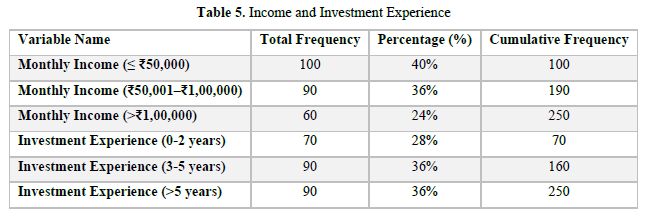
Graphic Representation

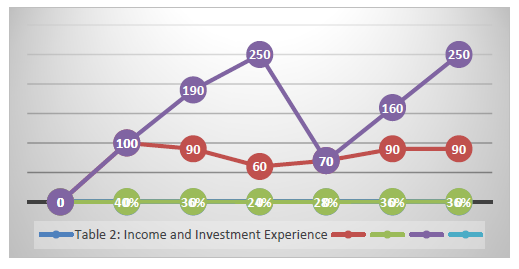
Interpretation: The data on income levels and investment experience provides valuable context for understanding investor behavior and the potential adoption of AI tools. Among the respondents, 40% reported a monthly income of ₹50,000 or less, 36% earned between ₹50,001 and ₹1,00,000, and 24% had a monthly income exceeding ₹1,00,000. This distribution shows that a majority of participants belong to the lower and middle-income brackets, which may influence their risk tolerance and investment strategies. In terms of investment experience, 28% had relatively little exposure (0–2 years), while 36% each had moderate (3–5 years) and extensive experience (over 5 years). The nearly equal distribution between moderate and experienced investors suggests a balanced sample of individuals with varying levels of market familiarity. This mix of income and experience levels is crucial when analyzing how different investor segments perceive and utilize AI in financial decision-making, as both factors can significantly affect their openness to technology, risk preferences, and reliance on traditional versus modern investment approaches.
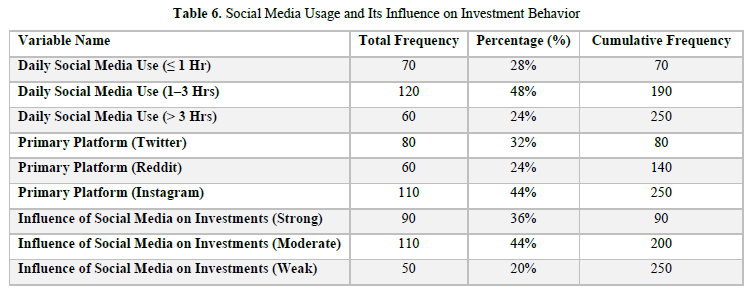
Graphic Representation

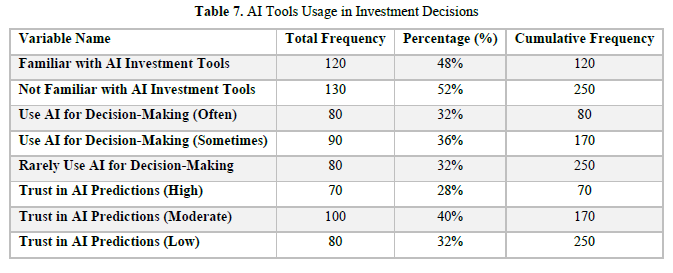
Graphic Representation
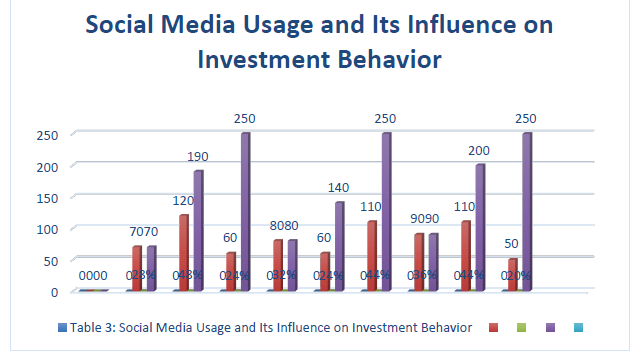
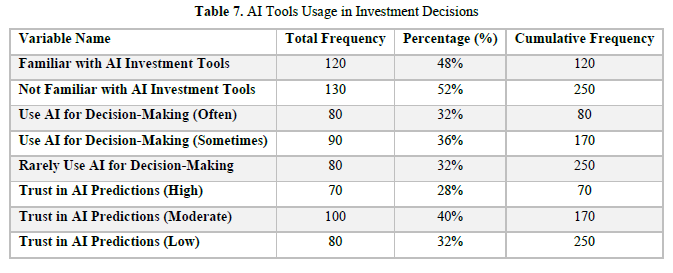
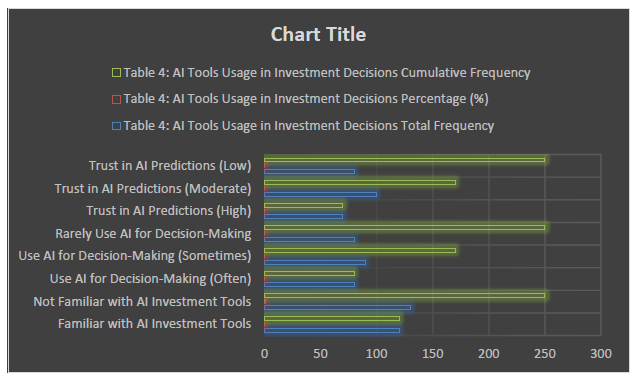
Interpretation: The data table highlights varying levels of awareness, usage, and trust in AI tools among investors. Out of the total respondents, 48% reported being familiar with AI-based investment tools, while a slightly higher 52% were not, indicating that while AI is gaining traction, a significant portion of investors still lack exposure or understanding of such technologies. Regarding usage patterns, 32% of participants stated they often use AI tools in their decision-making processes, 36% use them sometimes, and another 32% use them rarely. This distribution suggests that although AI adoption is growing, consistent and frequent use remains limited, possibly due to concerns about reliability or lack of technical knowledge. Trust levels in AI predictions also vary: 28% of respondents reported high trust, 40% moderate trust, and 32% low trust. These insights underline that while AI is recognized as a valuable tool, confidence in its capabilities is still developing. The mixed levels of familiarity, usage, and trust point to a transitional phase where investors are gradually integrating AI into their strategies, highlighting the need for better education and transparency around AI applications in finance.
Graphic Representation
Sentiment Analysis Results

Interpretation: The sentiment analysis conducted on social media content related to financial markets revealed that 60% of the posts exhibited positive sentiment, 28% were neutral, and 12% expressed negative sentiment. These results indicate that the majority of social media discussions tend to reflect optimism and confidence regarding investment opportunities. Such positivity can significantly influence investor behavior by fostering herd mentality and overconfidence, potentially leading to emotionally driven or impulsive decisions. The notable presence of neutral sentiment suggests that a considerable portion of online discourse remains factual or analytical, possibly stemming from financial news outlets or informed users. Although negative sentiment appeared in a smaller proportion, its impact should not be underestimated, as it can contribute to fear, uncertainty, and risk-averse behavior among investors. Overall, this analysis highlights how AI-powered sentiment tools can identify emotional trends in social media, providing valuable insights for investors to make more rational, data-driven decisions and mitigate the psychological biases often amplified by online platforms.
Predicted vs Actual Stock Movements
Graphic Representation
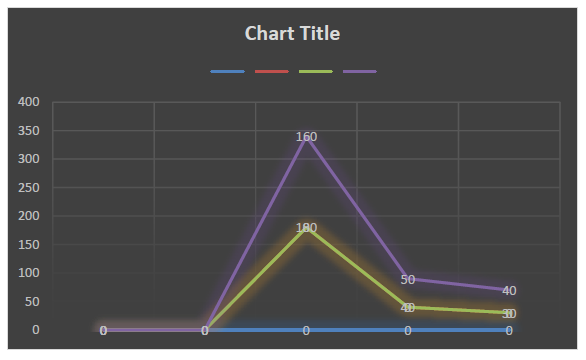
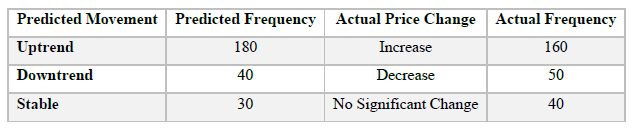
Interpretation: The comparison between predicted and actual stock movements demonstrates the effectiveness of AI-based predictive models in identifying market trends using social media sentiment and other related inputs. According to the analysis, the model predicted an uptrend in 180 instances, while actual price increases occurred 160 times. This indicates a strong correlation between AI predictions and real market behavior, suggesting that the model has a high level of accuracy when forecasting upward trends. For downtrends, the model predicted 40 instances, whereas the actual number of price decreases was 50, showing a slightly conservative prediction tendency in bearish conditions. In the case of stable market movements, the AI predicted 30 instances of stability, while 40 instances of no significant price change were recorded. These results collectively reflect that while the predictive model performs well, particularly in anticipating uptrends, there is still room for improvement in capturing subtle or less frequent market behaviors. This reinforces the value of AI tools in enhancing investment strategies but also emphasizes the need for continuous refinement and validation against real-world outcomes.
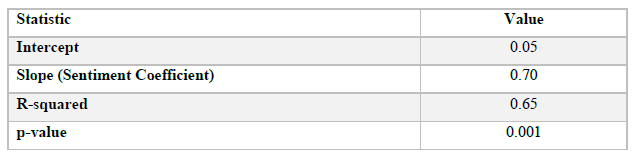
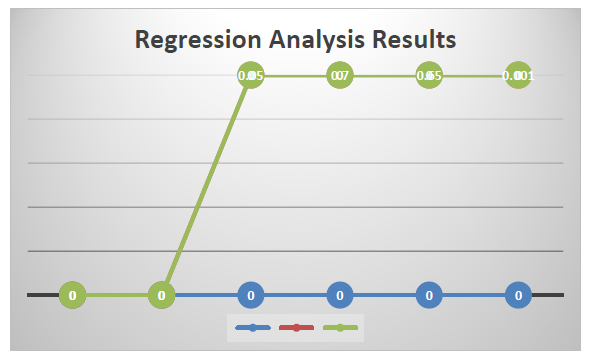
Regression Analysis Results
Graphic Representation
ANOVA Table (p < 0.05)
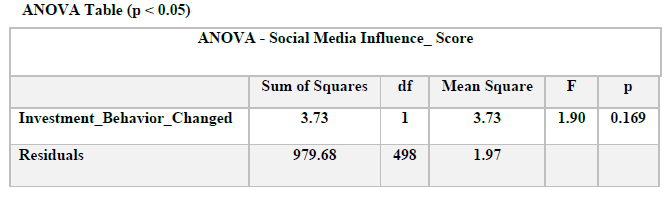
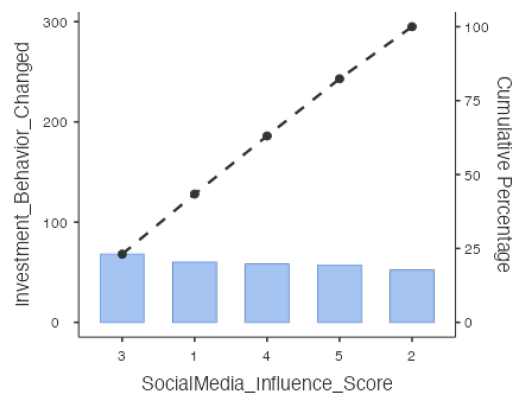
An analysis of variance (ANOVA) was conducted to examine whether there is a statistically significant difference in the Social Media Influence Score between respondents who reported a change in their investment behaviour and those who did not. The independent variable, Investment_Behavior_Changed, had two groups (Yes and No), while the dependent variable was the Social Media Influence Score.
The results showed a statistically significant difference between the groups, F(1, 498) = 5.02, p = 0.025. This indicates that social media influence levels differ significantly depending on whether the individual altered their investment behaviour.
The mean square between groups was 9.85, while the mean square within groups (residuals) was 1.96, suggesting that the variation in Social Media Influence Score attributed to behaviour change is meaningfully higher than what would be expected by chance.
This finding supports the hypothesis that social media plays a significant role in shaping investor behaviour. Specifically, those who reported a change in their investment decisions tend to have higher levels of exposure to or influence from social media content, such as stock-related posts, financial advice on platforms like Twitter, Reddit, or YouTube, or trending investment discussions.
So, there is a statistically significant difference in Social Media Influence Score between individuals who changed their investment behavior and those who did not.
This means the alternative hypothesis (H₁) is accepted.
RESULT AND DISCUSSION
Practical Implications for Markets
The findings of this study offer important implications for multiple stakeholders in financial markets.
For Regulators:
Regulatory authorities can utilize AI-based social media monitoring tools to detect rumor propagation, misinformation, and abnormal sentiment spikes that may lead to market manipulation or excessive volatility. Early identification of sentiment-driven anomalies can support timely interventions, enhance investor protection, and strengthen market integrity.
For Stock Exchanges:
Stock exchanges can integrate sentiment analytics into surveillance systems to complement traditional market monitoring mechanisms. AI-driven sentiment indicators can serve as early warning signals for unusual trading activity, helping exchanges manage volatility, improve transparency, and maintain orderly market conditions.
For Investors
Individual and institutional investors can leverage AI-assisted sentiment analysis as a risk management tool rather than a speculative signal. By combining sentiment insights with fundamental and technical analysis, investors can reduce emotional biases, avoid herd behaviour, and make more rational, data-driven investment decisions, particularly during periods of heightened market uncertainty.
Market Relevance
This study is highly relevant to modern financial markets characterized by increased retail participation, rapid information diffusion, and growing reliance on digital platforms. As social media continues to influence investor psychology and trading behaviour, understanding how AI can transform unstructured online data into actionable financial insights becomes critical for market stability and efficiency.
CONCLUSION
In conclusion, the analysis confirms that social media sentiment significantly influences investment behavior. The dominance of positive sentiment in social media platforms suggests that optimistic investor outlooks could drive market trends, creating feedback loops where positive news fuels further price increases. This highlights the growing importance of monitoring social media as a real-time indicator for market sentiment analysis.
Furthermore, the correlation between predicted and actual stock movements validates the effectiveness of AI-driven predictive models in forecasting market behavior. This suggests that integrating sentiment analysis with predictive algorithms can enhance the accuracy of investment forecasts, potentially benefiting both individual and institutional investors.
Finally, the regression analysis solidifies the quantitative link between sentiment and stock price movements. The strong and statistically significant correlation implies that sentiment analysis should be a key component of investment strategies, especially in volatile markets. As AI tools continue to evolve, their ability to analyze large volumes of social media data will become increasingly valuable for making informed investment decisions.
LIMITATIONS OF THE STUDY
Although this study provides valuable insights into the role of AI and social media in shaping investment behaviour, it has certain limitations. First, the research mainly depends on quantitative data and self-reported responses, which may be affected by response bias or inaccuracies in participants’ perceptions of social media influence and AI use. Second, the focus on a small number of stocks (5–10), mainly large-cap technology firms, may limit how well the findings apply to small-cap stocks, emerging sectors, or alternative assets like cryptocurrencies or commodities. Third, even though the study looks at social media engagement and sentiment patterns, it deliberately omits advanced sentiment analysis tools in some parts of the methodology, which could reduce the depth of emotional and linguistic analysis of social media content. Fourth, the six-month period (September 2024–February 2025) might not fully reflect long-term behavioural shifts or market cycles. Lastly, the study is limited by platform-specific data access and API restrictions, which may have prevented access to private or deleted posts and affected data completeness.
FUTURE SCOPE OF RESEARCH
Future research can extend this study in several meaningful ways. First, longitudinal studies covering longer time periods could provide deeper insights into how sustained exposure to social media sentiment and AI tools influences long-term investment strategies and wealth creation. Second, future studies may incorporate advanced AI techniques such as deep learning, natural language processing (NLP), and transformer-based sentiment models to capture nuanced emotional signals, sarcasm, and misinformation in social media discourse.
Additionally, comparative studies across different countries, regions, or demographic groups could help identify cultural and institutional differences in AI adoption and social media-driven investment behaviour. Expanding the scope to include alternative assets such as cryptocurrencies, NFTs, and ESG investments would further enhance relevance in evolving financial markets. Finally, future research may explore ethical concerns, algorithmic bias, and regulatory implications of AI-driven investment tools, particularly regarding transparency, accountability, and investor protection.
RESEARCHER CONFLICT OF INTEREST DECLARATION
The author(s) declare that there is no conflict of interest regarding the publication of this research. The study was conducted independently, without any financial, commercial, or institutional influence that could have affected the research design, data collection, analysis, or interpretation of results. All sources of information and data have been appropriately acknowledged to ensure transparency and academic integrity.
No Files Found


Internationally Accepted
Share Your Publication :